

HAVS Assessment
Repeated and prolonged use of vibrating tools and machinery can lead to Hand-Arm Vibration Syndrome (HAVS) — a serious and often permanent condition affecting blood vessels, nerves, muscles, and joints of the hand and arm. At Mayfair Health Group, we offer comprehensive HAVS assessments using the established Tier 1–4 system, helping your business stay compliant and your employees protected.
Doctor-Led Service
Founded by experienced clinicians
Compliance-Focused
GMC-registered clinicians
Fast Turnaround
Reports delivered promptly
UK-Wide Coverage
On-site, virtual, mobile units
Protect Hands That Power Industry
Repeated and prolonged use of vibrating tools and machinery can lead to Hand-Arm Vibration Syndrome (HAVS) — a serious and often permanent condition affecting blood vessels, nerves, muscles, and joints of the hand and arm. At Mayfair Health Group, we offer comprehensive HAVS assessments using the established Tier 1–4 system, helping your business stay compliant and your employees protected.
Workers using grinders, drills, and other vibrating tools are at risk of long-term nerve and circulation damage. Early detection through HAVS assessments is essential.

Who Is at Risk of HAVS?
HAVS can affect any worker who regularly or occasionally uses vibrating tools or machinery. High-risk roles and equipment include:
High-Risk Roles
High-Risk Equipment
Even occasional use can result in HAVS, making initial screening essential for anyone using vibrating tools, regardless of frequency.

The Established Tier 1–4 HAVS Assessment System
At Mayfair Health Group, we deliver HAVS assessments using the recognised four-tier framework, ensuring a structured, compliant, and clinically rigorous approach to screening and monitoring.
Tier 1 — Initial Screening
Conducted prior to any vibrating tool use. A health questionnaire assessing baseline health and any pre-existing conditions relevant to HAVS risk. Required for all new tool users before exposure begins.
Tier 2 — Annual Health Surveillance
Repeated annually for all employees with ongoing vibrating tool exposure. A more detailed questionnaire reviewing any new or developing symptoms of HAVS since the previous assessment.
Tier 3 — Clinical Assessment
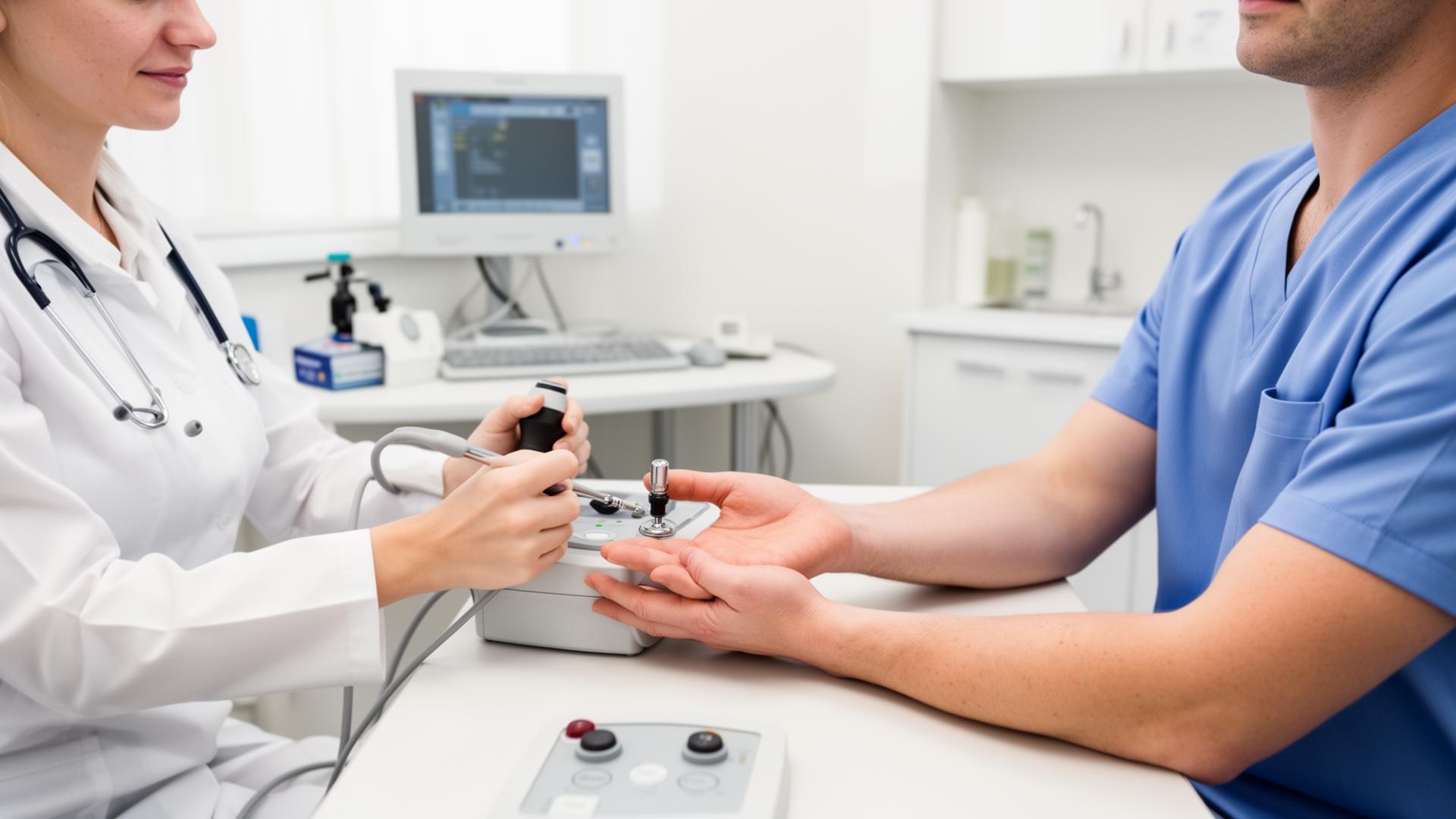
Carried out where an employee discloses symptoms at Tier 2. A face-to-face consultation with an Occupational Health Clinician to evaluate the nature and severity of symptoms in detail.
Tier 4 — Specialist Referral
Reserved for cases where Tier 3 findings indicate the need for further investigation. Formal referral to a specialist for advanced diagnostic testing and clinical management.
Is HAVS Assessment a Legal Requirement?
Yes. Under the Control of Vibration at Work Regulations 2005, employers have a legal duty to assess the risk of Hand-Arm Vibration to their employees, implement control measures, and provide health surveillance for those at risk.
Health surveillance must be provided where employees are regularly exposed to vibration at or above the Exposure Action Value (EAV) of 2.5 m/s² A(8). Failure to provide adequate HAVS surveillance can result in enforcement action by the HSE, significant fines, and serious liability in the event of a worker developing HAVS.
Early detection is critical — HAVS is a progressive condition and damage can become permanent if not identified and managed at an early stage. Mayfair Health Group delivers your surveillance programme in line with the Control of Vibration at Work Regulations 2005 and relevant HSE guidance, with documentation to an auditable standard.
Frequently Asked Questions
Who needs a HAVS assessment?
Any employee using vibrating tools or machinery — regularly or occasionally — should undergo a Tier 1 assessment prior to tool use.
How often should assessments be repeated?
Tier 1 and 2 are conducted initially and annually thereafter. Tier 3 and 4 are carried out as needed based on symptom disclosure.
Is HAVS only a concern for frequent tool users?
No. Even occasional use can result in HAVS, making initial screening essential for anyone using vibrating tools, regardless of frequency.
What are the symptoms of HAVS?
Early symptoms of HAVS include tingling, numbness, and blanching (whitening) of the fingers — particularly in cold or wet conditions. As the condition progresses, symptoms may include loss of grip strength, reduced dexterity, persistent numbness, and pain. HAVS is irreversible once advanced, which is why early-stage detection through regular assessment is so important.
How long does a HAVS assessment take?
Tier 1 and Tier 2 assessments are questionnaire-based and typically take 15–20 minutes per employee. Tier 3 clinical assessments involve a face-to-face consultation and take approximately 30–45 minutes. Tier 4 specialist referrals are arranged on a case-by-case basis.
Can assessments be carried out onsite?
Yes. Mayfair Health Group can deliver HAVS assessments onsite at your workplace, minimising disruption to your operations. Clinic-based appointments are also available where preferred.
Let's Get Started
- Doctor-Led Service
- Compliance-Focused
- Fast Turnaround
- UK-Wide Coverage
Accredited & Approved

;%20stroke-width:%200px;%20}%20%3c/style%3e%3clinearGradient%20id='New_Gradient_Swatch_5'%20data-name='New%20Gradient%20Swatch%205'%20x1='76.14'%20y1='140.5'%20x2='266.29'%20y2='-49.64'%20gradientUnits='userSpaceOnUse'%3e%3cstop%20offset='0'%20stop-color='%23814997'/%3e%3cstop%20offset='.09'%20stop-color='%2345267d'/%3e%3cstop%20offset='.31'%20stop-color='%23285989'/%3e%3cstop%20offset='.5'%20stop-color='%23128092'/%3e%3cstop%20offset='.65'%20stop-color='%23049897'/%3e%3cstop%20offset='.74'%20stop-color='%2300a19a'/%3e%3cstop%20offset='1'%20stop-color='%2300a19a'/%3e%3c/linearGradient%3e%3c/defs%3e%3cpath%20class='cls-1'%20d='m161.57,67.94c-1.54-4.28-2.3-8.97-2.3-14.06V1.16h18.91v52c0,2.67.42,5.13,1.27,7.39.85,2.26,2.04,4.22,3.58,5.88,1.53,1.66,3.37,2.95,5.52,3.88,2.14.93,4.46,1.39,6.97,1.39s4.81-.46,6.91-1.39c2.1-.93,3.92-2.22,5.46-3.88,1.53-1.65,2.73-3.62,3.58-5.88.85-2.26,1.27-4.73,1.27-7.39V1.16h18.91v52.73c0,5.09-.77,9.78-2.3,14.06-1.54,4.28-3.82,8-6.85,11.15s-6.81,5.62-11.33,7.4c-4.53,1.78-9.74,2.67-15.64,2.67s-11.23-.89-15.76-2.67c-4.53-1.78-8.3-4.24-11.33-7.4-3.03-3.15-5.31-6.87-6.85-11.15ZM3.67,63.7c-2.45-5.55-3.67-11.74-3.67-18.55s1.22-12.99,3.67-18.55c2.45-5.55,5.76-10.3,9.94-14.25,4.18-3.94,9.14-6.99,14.87-9.14,5.73-2.15,11.83-3.23,18.28-3.23s12.48,1.14,18.1,3.4c5.61,2.27,10.57,5.8,14.87,10.57,3.82-4.78,8.48-8.3,13.98-10.57,5.49-2.27,11.47-3.4,17.92-3.4,6.93,0,12.99,1.2,18.19,3.58,5.2,2.39,9.52,5.64,12.99,9.77,3.46,4.12,6.03,8.96,7.7,14.51,1.67,5.56,2.51,11.5,2.51,17.83v5.91h-62.72c-.12,3.23.48,6.15,1.79,8.78,1.31,2.63,3.02,4.9,5.11,6.81,2.09,1.91,4.39,3.38,6.9,4.39,2.51,1.02,4.9,1.52,7.17,1.52,5.38,0,9.86-1.1,13.44-3.32,3.58-2.21,6.75-4.99,9.5-8.33l14.87,10.57c-4.78,6.69-10.3,11.41-16.58,14.16-6.27,2.75-13.35,4.12-21.23,4.12-7.17,0-13.44-1.2-18.81-3.58-5.38-2.39-9.74-5.79-13.08-10.21-4.3,4.78-9.23,8.27-14.78,10.48-5.56,2.21-11.5,3.32-17.83,3.32s-12.54-1.08-18.28-3.23c-5.73-2.15-10.69-5.2-14.87-9.14-4.18-3.94-7.5-8.69-9.94-14.25Zm85.92-27.15h41.93c-.12-6.33-2.03-11.32-5.73-14.96-3.7-3.64-8.42-5.46-14.16-5.46-2.51,0-5.08.45-7.71,1.34-2.63.9-4.99,2.18-7.08,3.85-2.09,1.67-3.79,3.79-5.11,6.36-1.32,2.57-2.03,5.53-2.15,8.87Zm-68.09,8.6c0,3.58.56,7.02,1.7,10.3,1.13,3.29,2.8,6.15,5.02,8.6,2.21,2.45,4.87,4.39,7.97,5.82,3.11,1.43,6.63,2.15,10.57,2.15s7.67-.72,10.84-2.15c3.16-1.43,5.85-3.37,8.06-5.82,2.21-2.45,3.88-5.31,5.02-8.6,1.13-3.28,1.7-6.72,1.7-10.3s-.57-7.02-1.7-10.3c-1.14-3.28-2.81-6.15-5.02-8.6-2.21-2.45-4.9-4.39-8.06-5.82-3.17-1.43-6.78-2.15-10.84-2.15s-7.47.72-10.57,2.15c-3.11,1.43-5.76,3.38-7.97,5.82-2.21,2.45-3.88,5.32-5.02,8.6-1.14,3.29-1.7,6.72-1.7,10.3Zm237.52,1.09l34.91,40.73h26.42l-41.46-45.94L317.08,1.16h-24.73l-33.33,35.64V1.16h-18.91v85.82h18.91v-40.73Z'/%3e%3c/svg%3e)
Don't Leave It Too Late.
HAVS is progressive and irreversible. The sooner your employees are screened, the better protected they — and your business — will be.
- Delivered in line with the Control of Vibration at Work Regulations 2005 and relevant HSE guidance
- Tier 1–4 assessments delivered onsite or in clinic
- Doctor-led surveillance for at-risk workforces